
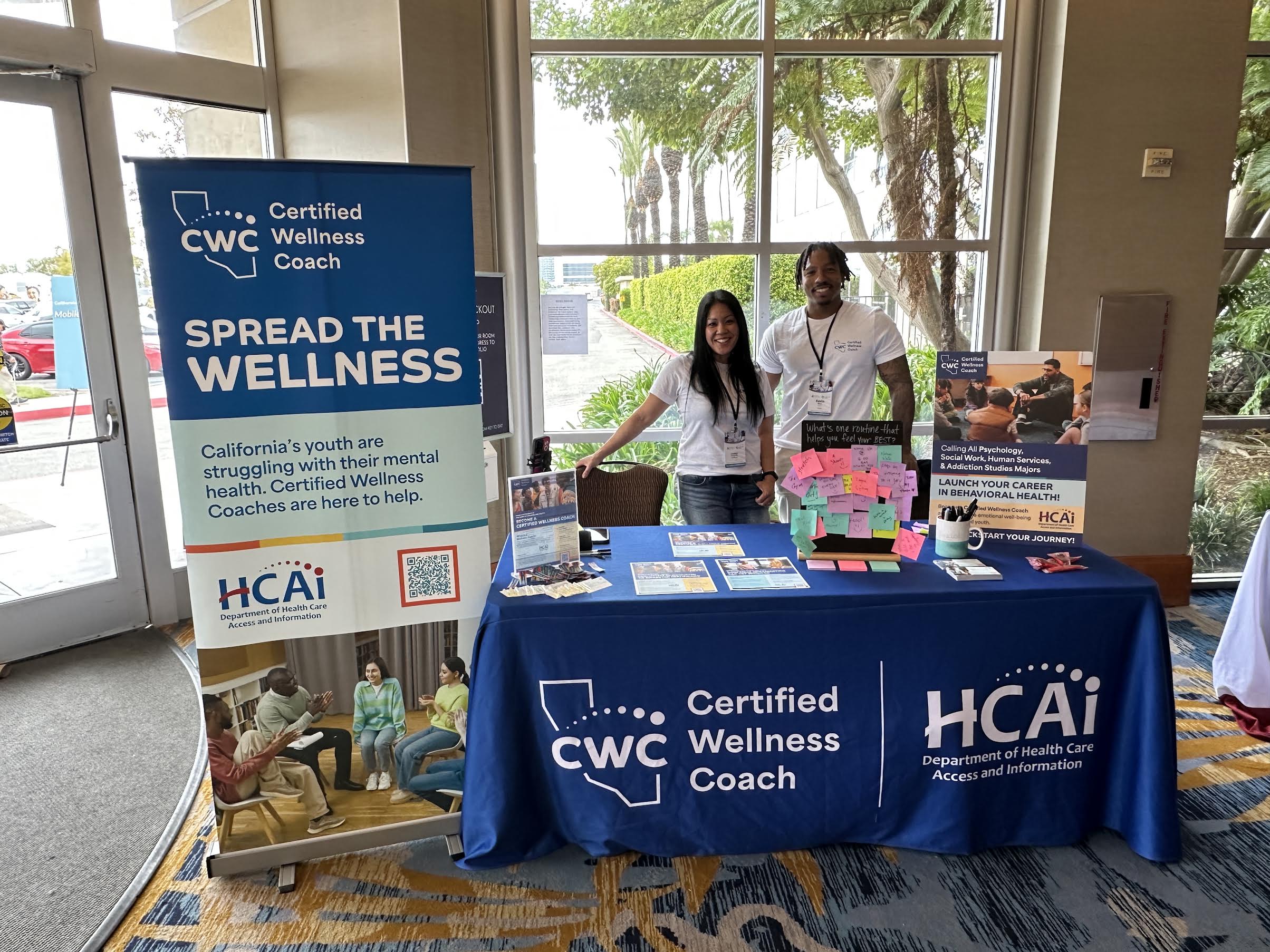
What California’s Certified Wellness Coach rollout reveals about what it takes for a new behavioral health role to take hold at scale.
California needed to expand behavioral health support for children and young people, and part of the solution was a role most Californians had never heard of.
Through the California Department of Health Care Access and Information, the state introduced Certified Wellness Coaches: a new frontline behavioral health workforce focused on prevention, early support and connecting children and young people with the help they need.
It was an ambitious undertaking. HCAI had to help establish an unfamiliar profession at scale. People had to want to enter it, employers had to understand where it fit, families had to trust it, and the infrastructure around certification, hiring and public understanding had to develop at the same time.
Wondros partnered with HCAI on the statewide communications, outreach and recruitment effort. The work offers a useful example of what communications can do when a new profession, program or service needs an entire ecosystem around it to take hold.
A new workforce needs an ecosystem before it can scale
A functioning workforce depends on movement from both sides. People have to want to enter the profession, and organizations have to understand the value of the role and be ready to hire it.
HCAI needed to recruit a culturally and linguistically diverse candidate pool, build the workforce quickly, help employers understand the role and available funding, and build public familiarity so families and young people would feel comfortable engaging with it.
What has to exist for a new workforce to take hold?
A reason to join
People see a worthwhile path into the profession.
A reason to hire
Employers understand the role and have a way to use it.
A way to navigate
Eligibility, certification and next steps are clear.
A source of legitimacy
Trusted people and institutions help establish credibility.
A system that can evolve
Communications change as the workforce moves from introduction to recruitment to hiring.
Clarity turns interest into participation
Established professions come with inherited knowledge. People generally know what a nurse does. Employers already have job descriptions, reporting structures and salary bands for familiar roles.
A new profession begins with much less shared understanding, which makes clarity unusually consequential. Early candidate research surfaced questions around eligibility, qualifications, timing, cost and next steps. The candidate journey work showed that momentum was strongest when people could quickly understand the requirements for their pathway and what to do next.
Qualification information, FAQs, pathway content and eventually the “Find Your Path” experience helped translate a developing state program into decisions an individual person could actually make. In emerging programs, information architecture can become part of implementation itself. Clear language, sequencing and next steps can determine whether interest turns into participation.
Legitimacy travels through people and institutions that already have it
Credibility can travel. People often encounter a new idea through an institution, community or person whose judgment they already trust.
Research conducted with NORC found that community-based organizations were among the most trusted sources of information for potential Certified Wellness Coach candidates. College counselors and friends also ranked highly. People already working in roles similar to Wellness Coaches emerged as particularly convincing messengers.
Community engagement became part of the communications infrastructure from the beginning. The team identified more than 200 mission-aligned organizations and equipped partners with materials in English and Spanish. That network eventually grew to more than 700 partners.
The strategy has to work while things are still changing
The Certified Wellness Coach campaign began while the underlying program was still being developed. Waiting for perfect information would cost time, while racing ahead could produce messages that quickly became outdated.
The campaign was structured to evolve. Phase 1 paired a quick-launch strategy with ongoing formative research conducted by Wondros and NORC. Phase 2 expanded the campaign across the website, video, paid and organic channels, earned media and milestone-specific outreach. Phase 3 shifted further toward hiring and activation as the workforce matured.
When communications and implementation are happening simultaneously, the campaign needs ways to learn, update and redirect effort while the strategy stays coherent. That is especially important in public health, government, science and other environments where policy, funding, implementation and public understanding rarely move on identical timelines.
Success changes the communications problem
A long-running campaign can lose effectiveness by continuing to solve the problem it started with. As awareness of Certified Wellness Coaches grew, the need shifted toward hiring, employer activation and workforce navigation. That progression from awareness and education, to recruitment, to activation, reflects something fundamental to adoption work: the behavior communications needs to drive changes as the conditions around an initiative change.
From a state initiative to real service capacity
As of July 2026, the Certified Wellness Coach campaign had generated more than 616 million impressions, 2.5 million site visits and 59,600 conversions.
More than 4,800 Certified Wellness Coaches had been recruited across 55 of California’s 58 counties. Coaches were working across more than 745 sites, with more than 176,000 students already receiving support.
Those numbers show how the idea progressed through the system:
policy → understanding → interest → certification → hiring → service capacity
Working backward from that outcome helps clarify the role communications played. Expanding behavioral health support required Coaches in the field, which required hiring, certified candidates, employer demand, and people who understood and trusted a role that barely existed in public consciousness.
This pattern extends well beyond workforce development. It shows up when a state introduces a new public program, a health system creates a new model of care, or a research initiative needs people to participate in something unfamiliar. Mapping those conditions early helps communications shape what happens next.